Getting Married in Greece: The Complete Guide for UK Couples
Veilly Team
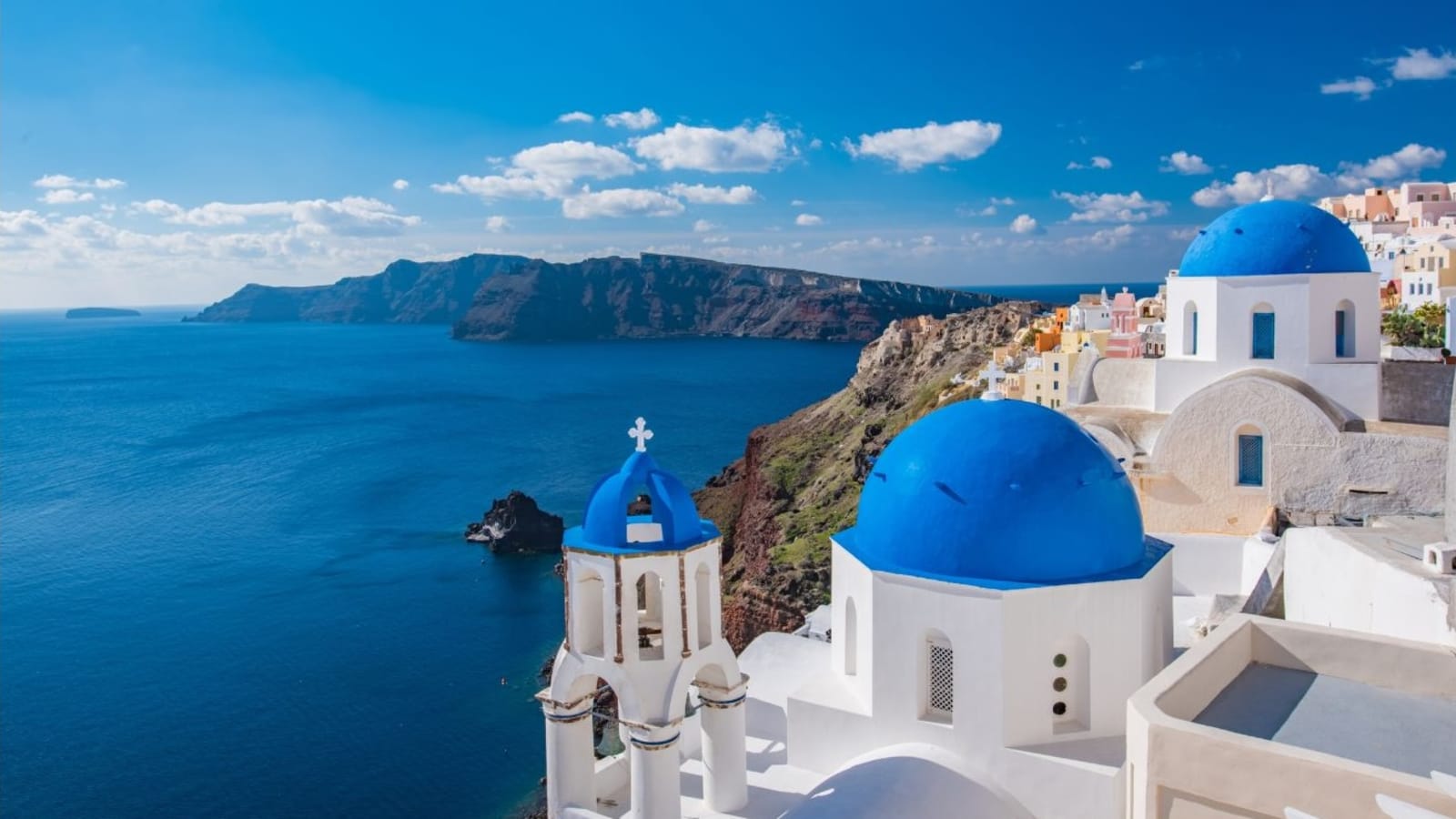
Getting married in Greece is one of the few options where a UK couple can hold a fully legal wedding on site — no residency requirement, no six months of paperwork — and since 2024 that includes same-sex couples too. Then there's everything you actually come for: the Santorini caldera, Crete's olive groves and light that simply can't be replicated. This guide covers the paperwork, the real costs, the weather (including the meltemi wind nobody warns you about) and how to choose your island.
Key takeaways
- Greece has no residency requirement, and the paperwork (an apostilled CNI with certified Greek translations) realistically takes three to four months and costs £200 to £400 in official fees. It's one of the simplest routes to a fully legal wedding abroad.
- Since February 2024, same-sex marriage is legal in Greece — including for couples from abroad. It's the only Mediterranean destination in the UK top tier where a same-sex couple can hold a fully legal wedding on site.
- Most destination weddings in Greece come in between €15,000 and €40,000, but the island changes everything: a Santorini wedding costs two to three times more than a comparable one on Crete or Rhodes. The same €30,000 hosts 75 guests on Corfu or 50 on Santorini.
- The best weather windows are late May to June and September to early October. In July and August the meltemi blows across the Cyclades — a strong wind that can hold for ten days straight and demands a plan B for décor, hair and sound.
- Santorini venues in peak season book twelve to eighteen months ahead, and the top venues and photographers disappear eighteen to twenty-four months out. Shoulder season (May, late September, October) saves 20 to 40 per cent.
Why Greece?
Greece gives you two things no other popular destination combines: top-shelf scenery and paperwork you can genuinely complete. A full 70 per cent of destination weddings in Greece are for couples travelling from abroad — the infrastructure is better rehearsed than anywhere else, from planners to town halls used to foreign documents. Flights from the UK: Athens around three hours forty-five, Corfu three hours, Santorini and Crete around four — though some direct island routes run seasonally, so off-peak your guests may connect through Athens, which is worth flagging early. Greece is not, however, for couples dreaming of castles and vineyards — this is an aesthetic of white, blue, stone and sea. And it's far from uniform on price: between Santorini and Crete lies a budget chasm.
How to get married in Greece as a UK couple
Let's start with the best news: a civil wedding in Greece is a genuinely convenient option for UK couples — not a compromise, not a legal curiosity. Here's how the process works.
What documents do you need?
Each of you needs a valid passport, a full birth certificate (showing your parents' names) and a certificate of no impediment (CNI) — the official confirmation you're free to marry — from your local register office in the UK, issued after the statutory notice period. Every document must be apostilled (the international legalisation stamp) and translated into Greek by a certified translator. If either of you is divorced or widowed, add the decree absolute or death certificate. You submit everything to the municipality (dimos) where you'll marry, which issues the marriage licence — and you need to be there at least one working day before the ceremony to sign the application in person.
How long does it take, and what does it cost?
Realistically three to four months from start to licence: gathering documents two to six weeks, apostilles one to three weeks, translations one to two weeks, municipality review one to two weeks, and the licence itself around eight days. Official fees come to just £200 to £400 — a fraction of what you'll spend on flowers. After the ceremony, the marriage must be registered at the civil registry (Lixiarcheio) within 40 days; your planner or venue usually handles this. Treat the paperwork as one of the last steps of planning, not the first: you book the venue a year out and start the documents four to five months before the date.
Civil, Orthodox or symbolic?
A civil ceremony can take place at the town hall or — importantly — outdoors with an authorised official, so the ceremony on a caldera terrace can be the real one. A Greek Orthodox church wedding is also legally binding, but requires at least one of you to be baptised Orthodox. A symbolic ceremony remains an option for couples who prefer to handle the legalities in England — but in Greece, unlike Italy, it isn't a necessity.
Same-sex couples: Greece changed the game
Since 16 February 2024, same-sex marriage is fully legal in Greece — the first Orthodox Christian country in the world to take that step. The law covers couples from abroad: the first overseas same-sex couple married on Rhodes as early as March 2024. For UK couples this means a fully legal wedding on site under the same CNI procedure — something no other top Mediterranean destination for British couples offers (Italy recognises civil unions only).
How much does a wedding in Greece cost?
Most destination weddings in Greece come in between €15,000 and €40,000 all-in, with larger premium weddings of 70 to 100 guests reaching €35,000 to €50,000 and beyond. The decisive variable, though, is the island. On Santorini, venue hire alone for 100 guests runs €12,000 to €14,000, and total budgets typically land between €40,000 and €60,000 — around €400 to €700 per guest. A comparable wedding on Crete or Rhodes costs two to three times less: a Cretan venue runs €5,500 to €8,000, and Corfu stretches from €160 to €300 per guest at the value end to €500 to €1,000 and beyond in the luxury tier.
That spread is the single biggest budget decision you'll make: the same €30,000 hosts 75 guests on Corfu or 50 on Santorini. The second lever is timing — shoulder season (May, late September, October) cuts venue and vendor prices by 20 to 40 per cent with weather that still looks like midsummer. And if the caldera backdrop is non-negotiable, consider the hybrid more and more couples choose: an intimate ceremony on Santorini and a full-guest-list celebration on Crete or back in the UK.
When to go: the weather month by month
Greece's wedding season runs from May to mid-October. Late May and June are the ideal: 22 to 27°C, warm evenings, the Ionian islands still green, and prices below the peak. July and August mean 30°C-plus and a phenomenon the brochures skip: the meltemi, a strong northerly wind that blows across the Aegean from June to September, peaking in July and August when it can hold for ten days straight. It mainly affects the Cyclades — Santorini, Mykonos, Paros, Naxos — and for an outdoor ceremony it means weighted linens, a hair plan and backup sound; it can disrupt ferry schedules too. The Ionian islands (Corfu) are largely free of it, though they see the occasional brief summer shower. September is the planners' favourite: the warmest sea of the year, golden light, thinner crowds. October still works, especially on Crete and in the south — though some seasonal infrastructure (ferries, beach restaurants) starts winding down in late September. April and early May are for the brave: beautiful and cheap, but the sea is cold and the weather less predictable.
Which island? Five destinations compared
Your choice of island sets the budget, the guest logistics and the character of the wedding more than any other decision. Here are the five UK couples choose most.
Santorini
The icon, and Greece's most expensive address: whitewashed buildings on the caldera rim, the sunsets, and venues like Le Ciel and Santorini Gem with a view that fills the frame on its own. The price of that postcard: €400 to €700 per guest, totals usually €40,000 to €60,000, bookings twelve to eighteen months out (top venues and photographers: eighteen to twenty-four). The logistics need care — smaller hotels scattered along the cliff, narrow steps, transfers for older guests. Best for guest lists up to 60 or 70 and couples for whom the view is worth every pound. In August, factor in the meltemi.
Mykonos
The party, luxury edition: beach clubs, hotels like Bill & Coo, Cavo Tagoo, Kenshō and Santa Marina, full property takeovers for 40 to 100 guests, and sunsets from the 180° Sunset Bar. On price it plays in Santorini's league; in style it draws younger guest lists planning a weekend that doesn't end at midnight. The meltemi hits Mykonos just as it does Santorini — plan with the wind in mind.
Crete
The best value in Greece and the natural choice for bigger groups: venues from olive groves (like Agreco Farm near Rethymno) to seafront estates, with hire at €5,500 to €8,000. Two airports (Heraklion, Chania) with direct UK flights, space for 100-plus guests, and the longest season — beach weather into late October. Less iconic than Santorini, but more authentic and far kinder to both budget and logistics.
Corfu
Green, Venetian and Ionian — a completely different Greece: villas among cypresses, luxury hotels, a gentler climate and no meltemi. The flight from the UK is only around three hours, the shortest of the five. The price range is enormous: from €160 to €300 per guest up to €500 to €1,000-plus in the luxury tier, making Corfu the most budget-flexible island on this list. The right choice if you want green in the frame instead of the volcanic starkness of the Cyclades.
Rhodes
A medieval old town, strong tourist infrastructure and prices well below the Cyclades. This is where the first overseas same-sex couple married in March 2024 after the law changed — a fitting proof of how smoothly the wedding machine runs here. The season is long, with (seasonal) direct flights at around four hours fifteen. For couples who want history and stone in the backdrop instead of white and blue.
How to decide? The view above all, with an intimate list — Santorini. A premium party weekend — Mykonos. A big group, a controlled budget and the longest season — Crete. Greenery, a short flight and budget flexibility — Corfu. History and value — Rhodes.
Greek wedding customs that surprise UK guests
If your ceremony is Orthodox, prepare your guests: it lasts around an hour, guests mostly stand, and its heart is the stefana — ribbon-joined crowns descended from Byzantine royal ritual — and the three circles around the altar table to the hymn of Isaiah, led by the priest and the koumbaro (a witness whose role carries far more weight than a British best man's). British-style speeches aren't part of Greek tradition — if you want the father-of-the-bride and best-man toasts, plan them with the venue in advance.
The celebration starts later and runs longer than in the UK: dinner begins when English guests would be thinking about taxis, and the dancing can run until four in the morning. The centre of the night is the kalamatianos — a twelve-step circle dance that the couple begins and the whole room finishes; your guests won't be spectators, they'll be participants. Warn them about the money dance too: pinning banknotes to the couple's clothes during the dancing is Greece's primary wedding gift, given generously and in public — British guests used to discreet envelopes are often caught off guard. At the end, everyone receives a small box of koufeta, sugared almonds in an odd number symbolising the indivisibility of marriage. And the plate smashing? Contrary to the stereotype, it's rare today — a regional tradition (Crete, the north) that many venues have restricted; if you have your heart set on it, agree it with the venue ahead of time.
Island guest logistics: do the maths early
Try this on for size: 80 guests flying to Santorini in September. Some direct from London and Manchester, some connecting through Athens, two arriving by ferry from Crete. Hotels scattered across three clifftop villages, transfers on narrow roads, a 6pm ceremony timed for the sunset, and the meltemi in the forecast. Every guest needs to know where they're sleeping, who's collecting them from the airport, what time to be at the venue — and that stilettos on the stone steps of Oia are a mistake.
On an island, every one of those details multiplies questions faster than anywhere else — and that problem is where the Veilly story began. One private wedding website where every guest sees their hotel, their transfer and the full weekend schedule, through a single link from the invitation — no app, no registration. You answer zero questions, and the wedding looks as considered from the first click as the view from the caldera.
Your planning timeline, step by step
Start twelve to eighteen months before the date — and for top Santorini venues in peak season and the best photographers, allow eighteen to twenty-four. In that window: island, venue, planner, and a date with a wind plan B. Nine to twelve months out: save-the-dates with travel information (especially important with seasonal flights — guests need to know whether to fly direct or via Athens). Six months out: menu, music, flowers. Four to five months out: start the CNI, apostilles and translations, with margin for corrections. Two to three months out: RSVP deadline, assign guests to hotels and transfers, finalise the licence with the municipality. The final week: sign the application at the town hall (at least one working day before the ceremony) — and that's all the bureaucracy Greece will ask of you on site.
Summary
Greece combines what wedding destinations usually force you to choose between: cover-page scenery and paperwork a UK couple can genuinely finish in a few months for a few hundred pounds — and since 2024, that includes same-sex couples. Make the decisions in this order: island (it sets the budget — Santorini costs two to three times more than Crete), date (September wins; August means meltemi and peak prices), venue (twelve to twenty-four months out), and leave the documents calmly for four to five months before the date. What remains is the logistics: dozens of guests, seasonal flights, ferries, scattered hotels and the same questions asked on repeat. Hand that part to a page where everything is in black and white — the Greek light takes care of the rest.
Frequently asked questions
Here are the questions British couples ask most often when planning a wedding in Greece.
Can UK couples legally get married in Greece?
Yes, and unusually easily: Greece has no residency requirement. You need a CNI from your local register office, apostilles and certified Greek translations; the whole process realistically takes three to four months and costs £200 to £400 in official fees. On site, you only need to arrive one working day before the ceremony.
Can same-sex couples get married in Greece?
Yes. Since 16 February 2024, same-sex marriage is fully legal in Greece, including for couples from abroad — the first Orthodox Christian country in the world to legalise it. The procedure is the same as for opposite-sex couples.
How much does a wedding in Greece cost for 80 guests?
It depends on the island: on Crete, Rhodes or Corfu, realistically €20,000 to €35,000; on Santorini and Mykonos, €40,000 to €60,000 or more (€400 to €700 per guest). Shoulder season cuts prices by 20 to 40 per cent.
What is the best month to get married in Greece?
Late May, June and September — with September as the favourite: the warmest sea, golden light, thinner crowds. July and August bring heat, peak prices and the meltemi across the Cyclades.
What is the meltemi, and will it ruin our ceremony?
The meltemi is a strong northerly wind that blows across the Aegean from June to September, strongest in July and August, mainly across the Cyclades (Santorini, Mykonos, Paros, Naxos). It won't ruin the ceremony if the venue has sheltered spaces, the décor is weighted and the sound system has a backup. The Ionian islands, like Corfu, are largely free of it.
How far in advance should we book a venue in Greece?
Twelve to eighteen months as standard. Top Santorini venues and the best photographers go eighteen to twenty-four months before peak dates. Off season and on the larger islands (Crete, Rhodes), six to twelve months can be realistic.
Will our Greek wedding be recognised in the UK?
Yes — a civil or Orthodox wedding carried out under Greek law is recognised in the UK. Just remember the marriage must be registered at the Greek civil registry (Lixiarcheio) within 40 days of the ceremony; your planner usually handles this for you.