Getting Married in Croatia: The Complete Guide for UK Couples
Veilly Team
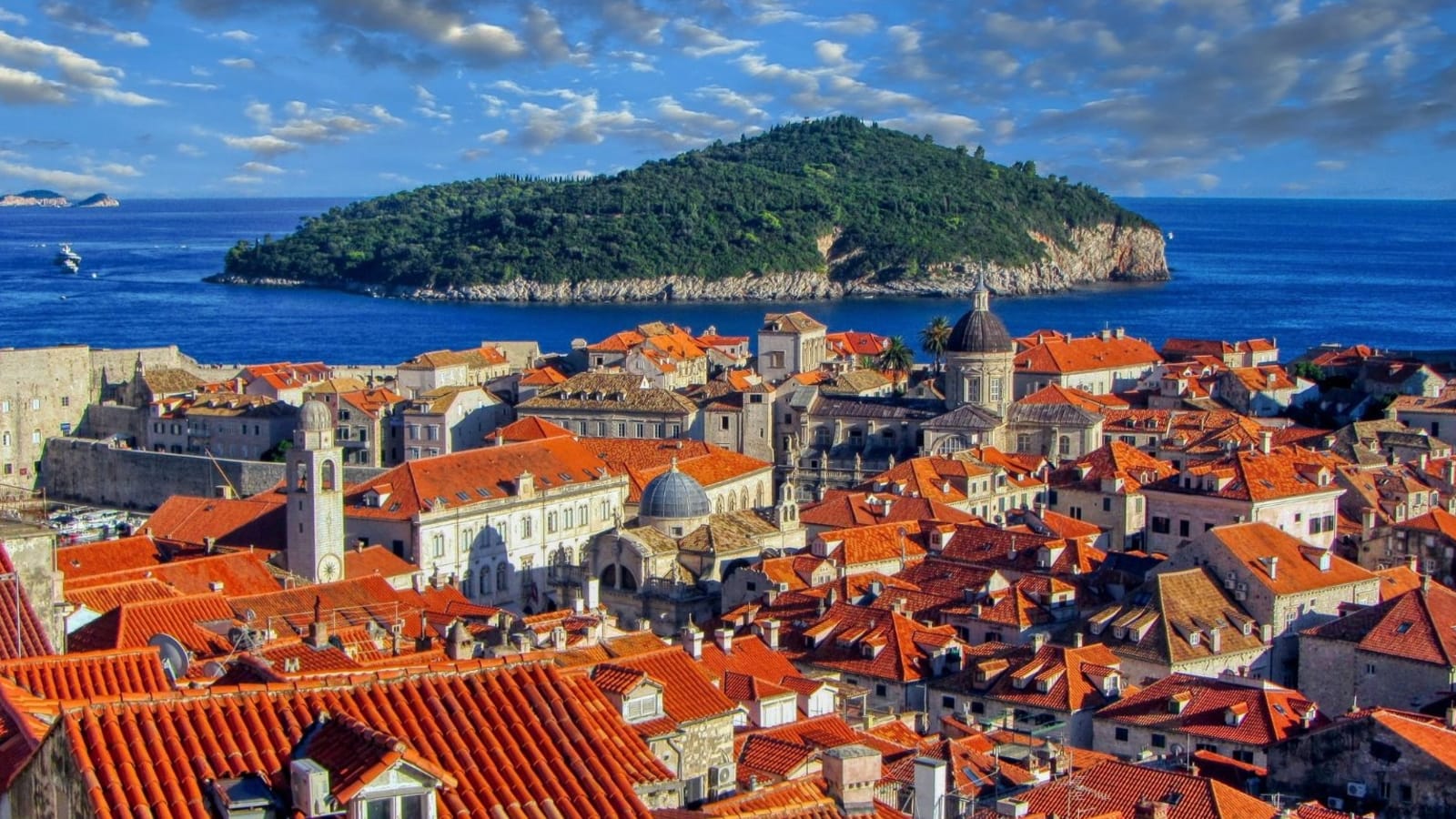
Getting married in Croatia pairs scenery Italy would envy — the walls of Dubrovnik, fortresses above turquoise water, islands laced with vineyards — with paperwork simpler than almost anywhere: you file the documents 30 to 45 days before the ceremony and need no residency at all. One thing deserves honesty up front: the myth of "cheap Croatia" has aged badly, because prices have roughly doubled since 2019. This guide shows what's true today — from the documents, through real budgets, to the choice between Dubrovnik, Hvar, Split and Istria.
Key takeaways
- Croatia has no residency requirement, and the formalities are among Europe's simplest: an apostilled CNI with certified translations, documents with the registrar 30 to 45 days before the wedding, and first contact with the registry office around three months ahead.
- Prices have doubled since 2019: an intimate wedding for up to 10 people runs €5,000 to €15,000, and a premium celebration for 100-plus guests €40,000 to €70,000 or more. Dubrovnik costs 10 to 15 per cent more than the rest of the country; Istria remains the most affordable.
- The best months are June and September. July and August mean heat, cruise-ship crowds in Dubrovnik and peak accommodation prices (€250 to €500 per room per night in season).
- Since 2023 Croatia uses the euro and belongs to Schengen — no currency exchange and no border complications for guests travelling through Europe.
- Same-sex couples can enter a životno partnerstvo (life partnership, since 2014, with most marriage rights) on site, but not a marriage — for a fully legal same-sex wedding in the region, Greece is the answer.
Why Croatia?
Croatia arrived on the wedding map as "the sensible Italy" — the same Mediterranean aesthetic of stone and sea, simpler paperwork, lower prices — but it has built an identity of its own: no other destination lets you marry inside a real fortress above the Adriatic, or hire, exclusively, the palace where a Renaissance republic minted its coins. The logistics cooperate: Dubrovnik is two hours forty-five direct from London, Split around two thirty-five, Pula for Istria even closer — though some routes run seasonally, worth remembering for spring and autumn dates. Since 2023 the country is in the eurozone and Schengen, so guests exchange no currency and clear no extra borders. Croatia is no longer the bargain of a decade ago — but at today's rates you still get scenery money can't buy anywhere else.
How to get married in Croatia as a UK couple
The Croatian procedure is short and predictable, with one fixed element: a statutory window for filing the documents. Here's how it works, step by step.
What documents do you need?
Each of you needs: a passport valid for at least twelve months, a full birth certificate and a certificate of no impediment (CNI), the official confirmation you're free to marry — which for Croatia, unlike most destinations, you apply for by post from the British Embassy in Zagreb, enclosing a notice and affirmation with your signature witnessed by a notary in the UK. Every document must be apostilled (the international legalisation stamp) and translated into Croatian by a court-certified interpreter. If divorced, add the decree absolute; if widowed, the death certificate — likewise apostilled and translated.
How long does it take, and when should you start?
Contact the registry office (matični ured) in the municipality of your wedding around three months before the date, and file the full set with the registrar 30 to 45 days before the ceremony — a statutory waiting period that can't be shortened except in genuinely exceptional cases. In practice: send the CNI application to the embassy in Zagreb three to four months before the wedding (diplomatic post appreciates a buffer), then apostilles and translations, and you'll fit the window comfortably. At a civil ceremony, a couple who don't speak Croatian must provide a court interpreter — venues and planners arrange this routinely.
Civil, church or symbolic?
A civil wedding can take place outside the registry office — on a fortress terrace, in a villa garden, on the deck of a sailing boat — with the registrar's approval and an interpreter present. A Catholic wedding is legally binding (formalities via your UK parish). A symbolic ceremony remains an option, but — as in Greece or Portugal — it isn't a necessity here, so most couples choose the real thing on site.
Same-sex couples: what you need to know
Since 2014 Croatia offers same-sex couples the životno partnerstvo — a life partnership carrying most marriage rights — but not marriage. Foreign couples can enter a partnership too. If a fully legal marriage on site matters to you, Greece offers one in the region (since 2024); otherwise the standard route applies: a legal wedding in the UK and the ceremony in Croatia.
How much does a wedding in Croatia cost?
Time for the honesty most guides skip: Croatian prices have roughly doubled since 2019, and "cheap Croatia" is now a myth — the correct version is "Croatia, still cheaper than Italy for the same scenery". Concretely: an intimate wedding or elopement for up to 10 people runs €5,000 to €15,000, and a premium production for 100-plus guests €40,000 to €70,000 and beyond. Inside that: venue hire €3,500 to €8,000 (on Hvar, a ceremony alone €700 to €2,500, and exclusive luxury receptions up to €25,000-plus), menus at €110 to €300 per person plus drinks, photography €3,500 to €12,000, a planner €3,500 to €7,000.
Geography matters: Dubrovnik costs 10 to 15 per cent more than the rest of the country, Hvar plays in a similar league, and Istria and the Split area stay noticeably gentler. The second line item that surprises couples is guest accommodation: in peak season, rooms in Dubrovnik or on Hvar run €250 to €500 a night — across 80 guests, a real cost worth addressing early with block bookings of apartments and villas. April and October bring noticeably better rates on everything.
When to go: the weather month by month
The Adriatic season runs from May to October. May brings 20 to 25°C, green islands and pre-season prices — though the sea can still be brisk. June is the sweet spot: warm, long days, ahead of the crowds. July and August mean 30°C-plus, the highest prices and — a Dubrovnik speciality — cruise-ship crowds in the old town's narrow streets; ceremonies shift to late afternoon and the old town is best avoided during ship hours. September rewards the patient: the warmest sea of the year, soft light, and towns handed back to their locals. October still works in the south — and a card of its own is Hvar, statistically the sunniest island in the Adriatic with over 2,700 hours of sunshine a year, making it the safest weather bet at the edges of the season. In winter the coast winds down and most seasonal infrastructure closes until spring.
Which region should you choose?
The Croatian coast offers four different stage sets — and, increasingly, a fifth for those in the know. Here's how UK couples choose.
Dubrovnik
The pearl of the Adriatic, and a backdrop that needs no introduction to anyone who's seen a single frame of King's Landing. Fort Lovrijenac — a fortress on a rock above the sea, closed to visitors and privatised for your wedding — and the Renaissance Sponza Palace with its arcaded courtyard are the two most prestigious addresses in the country. The price of prestige: 10 to 15 per cent above the rest of Croatia, expensive accommodation and summer cruise crowds that must be written into the day's plan. Direct flight: two forty-five. For couples who want epic scale and don't fear old-town logistics.
Hvar
The sunniest island in the Adriatic (2,700-plus hours a year) and Croatia's answer to island glamour: the Fortica fortress above the town, beach clubs, Renaissance residences and lavender fields inland. Getting there needs communicating — a flight to Split plus a ferry or catamaran — but that's precisely the filter that leaves only truly committed guests on the island. Prices closer to Dubrovnik than Istria. An island for those who want energy and weather without a question mark.
Split and central Dalmatia
The country's second city, with Diocletian's Palace as its old town, and the coast's best logistics hub: an airport with numerous routes, ferries to the islands, and an enormous accommodation base at every budget. Around it — Trogir, the riviera, and the islands of Brač and Šolta within easy reach. Gentler prices, the same aesthetic of stone and sea — in short, Dalmatia without the Dubrovnik premium.
Istria
Croatia in its Italian register: medieval hilltop towns, vineyards, olive groves and the truffles that built the region's gastronomic reputation. The gentlest prices in this lineup, proximity to the airports of Pula and Trieste, and venues from rustic stancijas to designer wineries. The sea is less postcard-perfect than in the south, but the whole is more intimate — here food, wine and calm win over epic scale.
The wild card: Vis and Korčula
The further islands — Vis (the film set of Mamma Mia 2) and Korčula with its Venetian old town — offer the Adriatic as it was before mass tourism. Less infrastructure, more authenticity, moderate prices. An option for those after an island to themselves — with the longer ferry ride written into the adventure.
How to decide? Epic scale and prestige — Dubrovnik. Island glamour and sunshine — Hvar. Logistics and value — Split. Gastronomy and intimacy — Istria. An escape from the world — Vis or Korčula.
Croatian customs that surprise UK guests
A Croatian wedding begins before anyone reaches the ceremony. Guests are welcomed with rosemary: each receives a sprig pinned to the left side, often tied with a ribbon in the colours of the Croatian flag — the local sign of belonging to the wedding, standing in for the British buttonhole. The procession is led by the barjaktar, a flag-bearer who dances and clowns at the head of the parade — and the whole procession tends to be loud, musical and deliberately theatrical. If you hire a local klapa (a men's a cappella group singing Dalmatian songs), your guests will remember it longer than any DJ.
At the reception, around midnight, comes the dance with the bride: anyone who wants a dance drops a banknote into a basket held by the maid of honour — the local form of gift-giving, worth flagging to British guests, along with the fact that Croatian weddings can run until morning and nobody treats leaving before 2am as the norm. Among the lighter traditions: right after the ceremony the newlyweds try to step on each other's feet — whoever's first "runs the household" — which makes a great photo moment. Working with local vendors, communication is usually efficient and increasingly in English; just remember the court interpreter at a civil ceremony — a legal requirement, not an option.
Guest logistics: islands and city walls need a plan
Walk through an example: 80 guests, a wedding on Hvar in September. Everyone flies to Split, but some land at 11am and others at 10pm — and the catamaran to the island runs on its own schedule, not your guests'. Some sleep in Hvar town, some in Stari Grad twenty minutes away; the ceremony at the Fortica at 5.30pm (uphill, in the heat, elegant shoes inadvisable), dinner at a konoba above the bay, boats back at 1 and 3am. Every guest needs to know: which ferry, where they're being picked up, where they're sleeping, how to reach the fortress and when the last boat leaves. On an island, there's no taxi to rescue the one who missed it.
Veilly was born of precisely this frustration: one private wedding website where every guest sees their ferry, their accommodation, their return transfer and the full weekend schedule — through a link from the invitation, no app, no registration. The more moving parts your logistics have, the more questions land on you — or on the website that answers for you.
Your planning timeline, step by step
Twelve to eighteen months out: region and venue — Fort Lovrijenac and the top September dates go first; for an island, check the ferry schedules for your date straight away. Nine to twelve months out: save-the-dates with clear travel instructions (airport, ferry, last connection of the day). Six months out: menu, photographer, music (a klapa books up early), and accommodation blocks for guests — in peak season a priority, not an extra. Three to four months out: contact the matični ured, send the CNI application to the British Embassy in Zagreb, apostilles, court translations. Thirty to forty-five days out: file the full set with the registrar — the statutory window your planner will be watching for you. Two months out: RSVP deadline, guests assigned to accommodation, ferries and night boats. The final week: calm — the documents are sitting at the registry office, and the Adriatic does the rest.
Summary
Croatia has grown up: no longer the cheap alternative, but a destination in its own right, with fortresses nobody else has, simple paperwork with no residency requirement and euros in your guests' pockets. Make the decisions in order: region (Dubrovnik for scale, Hvar for sunshine, Split for logistics, Istria for flavour), date (June or September; in July and August budget for crowds and expensive rooms), a venue with an accommodation block for guests — and close the paperwork inside the 30-to-45-day window Croatian law sets for you. What remains is the logistics of ferries, boats and city walls — the most moving parts of any destination on our list — and a wedding website that turns them into a clear schedule instead of a hundred questions. The Adriatic will handle the rest.
Frequently asked questions
Here are the questions British couples ask most often when planning a wedding in Croatia.
Can UK couples legally get married in Croatia?
Yes, with no residency requirement. You need a CNI issued by the British Embassy in Zagreb (a postal application with a notarised notice), an apostille and certified Croatian translations, plus passports valid for at least twelve months. The documents go to the registrar 30 to 45 days before the ceremony, and you contact the registry office around three months ahead.
How much does a wedding in Croatia cost for 80 to 100 guests?
Mid-range, €25,000 to €40,000; premium, €40,000 to €70,000-plus. Prices have doubled since 2019; Dubrovnik costs 10 to 15 per cent more than the rest of the country, Istria the least. Budget guest accommodation separately: €250 to €500 per room per night at peak.
What is the best month to get married in Croatia?
June and September. July and August bring heat, peak prices and cruise-ship crowds in Dubrovnik. Hvar — the sunniest island in the Adriatic (2,700-plus hours a year) — offers the most weather certainty at the season's edges.
Can you get married in a fortress in Dubrovnik?
Yes — Fort Lovrijenac is hired exclusively (the fortress closes to tourists for your wedding), and the Renaissance Sponza Palace is the elegant alternative. These are the country's two most prestigious wedding addresses; book twelve to eighteen months ahead.
Can same-sex couples get married in Croatia?
Croatia has offered the životno partnerstvo since 2014 — a life partnership with most marriage rights, available to foreign couples too — but not marriage. For a fully legal same-sex wedding in the region, Greece has offered one since 2024.
Does Croatia use the euro?
Yes — since January 2023 Croatia is in the eurozone (and in Schengen). Guests exchange no currency, and those travelling through Europe clear no extra border checks.
Will our Croatian wedding be recognised in the UK?
Yes — a civil or church wedding carried out under Croatian law is recognised in the UK. Keep the apostilled marriage certificate, and remember the required court interpreter at a civil ceremony.